
When the warehouse and the books live in different systems
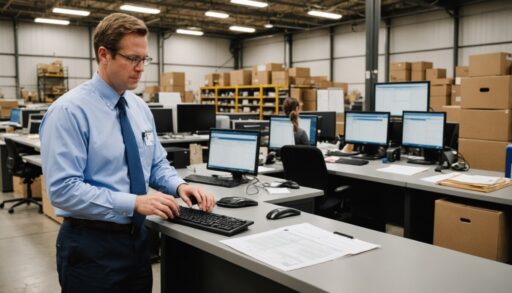
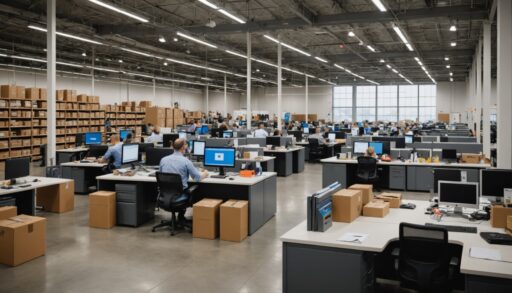
Picture a small importing distributor that receives bulk shipments, holds stock in its own warehouse, and ships to partner customers across multiple territories. The accounting runs in one application. Inventory counts and warehouse records live outside it, with numbers moved between the two through connectors and manual transfer. On most days the arrangement works well enough. But when a customer asks what is available at a specific location, or when the finance team needs to reconcile the cost of goods sold against what actually left the warehouse, someone has to pull data from two places and manually confirm they agree.
That reconciliation step is not a crisis. It is a recurring cost: time spent checking, correcting and explaining discrepancies that the two records could not resolve on their own.
Where the friction builds
The practical problem with this arrangement is not that it fails dramatically. It is that it introduces small, persistent gaps. In this illustration, one record reflects invoiced transactions and the other reflects physical movements. When those two records drift apart, even briefly, the people who depend on them, sales staff quoting availability, purchasing managers deciding whether to reorder, finance staff closing the month, have to decide which number to trust.
Adding a new stocking location makes the problem more visible. Each new facility needs to be represented in both records, and the connection between them needs to be extended and tested. If the distributor plans to serve additional territories and ship directly to partner customers from a local facility, that expansion multiplies the number of records that need to stay synchronized across two separate applications.
Bin-level tracking, knowing not just that a product is in a facility but exactly where it sits inside the warehouse, adds another layer. If the warehouse record tracks bin locations but the accounting system does not, the financial documents that reference that stock have no visibility into its physical position. That is a structural limitation of keeping the two functions separate.
What the gap costs in practice
The consequences are operational rather than catastrophic. A sales order allocated from a facility that turns out to be short requires manual intervention to redirect. A month-end close that depends on reconciling two inventory records takes longer than it should. A purchasing decision made on stale availability data may lead to an avoidable reorder, or to a shortage discovered late.
None of these outcomes is inevitable. But each one is more likely when the record of physical stock and the record of financial transactions are maintained separately. The question for a distributor evaluating its options is whether the cost of managing that gap, in staff time, in reconciliation effort, in the risk of acting on inconsistent data, is worth preserving the specialization that separate records offer.
What a single system needs to do well
For a distributor in this position, the relevant buying criteria are specific. The system needs to hold stock by facility so that availability at each location is visible without a manual lookup. It needs to allow orders to be allocated and shipped from a chosen facility, not just from a default location. It needs to record where goods sit within a warehouse at the bin level, and it needs those bin records to connect to the same transactions that generate invoices and cost-of-goods entries. Finally, it needs a clear path for adding stocking locations as the business grows, without requiring a parallel implementation or a new integration.
The tradeoff worth examining is not simply unified versus connected. It is whether the unified system handles both functions with enough depth to replace the specialist tools, and whether the configuration required to set it up is proportionate to the operational benefit.
How Versa addresses this workflow
Versa is a cloud ERP configured for distribution businesses that need accounting, inventory and warehouse management to share the same underlying data. Facilities are set up as distinct stocking locations within the system. Stock on hand is tracked per facility, so a sales order can be reviewed against availability at the specific location it will ship from, not against a consolidated total that obscures where the stock actually sits.
When a sales order is created, Versa can be configured to allocate quantity from a selected facility. The system supports assigning a shipping facility at the order level, and can also be configured to allow facility assignment at the individual line-item level, which matters when an order draws from more than one location. Automatic quantity allocation on sales orders is a configurable option, so the business can decide how much of that process to automate and how much to leave to the person entering the order.
Within each facility, bin locations record the physical position of goods inside the warehouse. Those bin records are part of the same system that generates the financial transactions, so the cost of goods sold, the inventory valuation and the physical stock position all reference the same data. Bin location counts can be reconciled against quantity on hand within the system, which reduces the manual checking that a separate record would otherwise require.
Adding a new stocking location means configuring a new facility within Versa. The financial and inventory records for that facility follow the same structure as existing ones, drawing on the same chart of accounts already in use. There is no separate integration to extend and no new connector to maintain. That matters for a distributor planning to take on additional territories, because the path to expansion is a configuration step rather than a system project.
Facility and bin structures need to be set up deliberately, and stock quantities reflect recorded transactions, so accuracy depends on transactions being entered completely and on time. These are real setup considerations, and they are worth planning for. For a distributor with a defined set of facilities and a stable product range, that planning is generally a one-time effort rather than an ongoing maintenance burden.
What the working day looks like with one system
Return to the distributor from the opening. A customer asks whether a specific product is available for shipment from the facility closest to their location. The sales person checks availability at that facility directly in the order entry screen, without switching to a separate application. The order is allocated from that facility. When the shipment goes out, the inventory record and the financial record update from the same transaction. At month end, the finance team closes against inventory figures that already match the warehouse record, because they were never separate to begin with.
When the distributor adds a new territory and begins shipping to partner customers from a second facility, the new location is configured in Versa. Orders for that territory are allocated from the new facility. The bin structure for the new warehouse is set up to match its physical layout. The financial documents for that facility draw on the same chart of accounts as the original location. No new connector is required.
Implementation still requires planning, data migration and training. But the structural question, whether the system can support the growth without a parallel integration project, has a clear answer.
See this workflow in Versa
If you are evaluating whether a single system can replace separate accounting and warehouse records for your distribution operation, the most useful next step is to see how facility-level stock, order allocation and bin tracking work together in a representative workflow.
Request a Versa demonstration focused on this workflow. A walkthrough of a representative import, warehouse receipt and outbound order will show how stock is recorded by facility, how allocation works at the order and line level, and how the financial documents connect to the same inventory transactions. No preparation is required on your part.
If you would prefer to explore the workflow before speaking with anyone, ask Versa AI Advisor about this workflow. The Advisor can answer questions about how location-level stock, order allocation and bin tracking work in Versa before you decide whether to speak with the sales team.
Request a Versa demonstration focused on facility-level stock, order allocation and bin tracking for an importing distributor.