
The Morning Stockroom Question
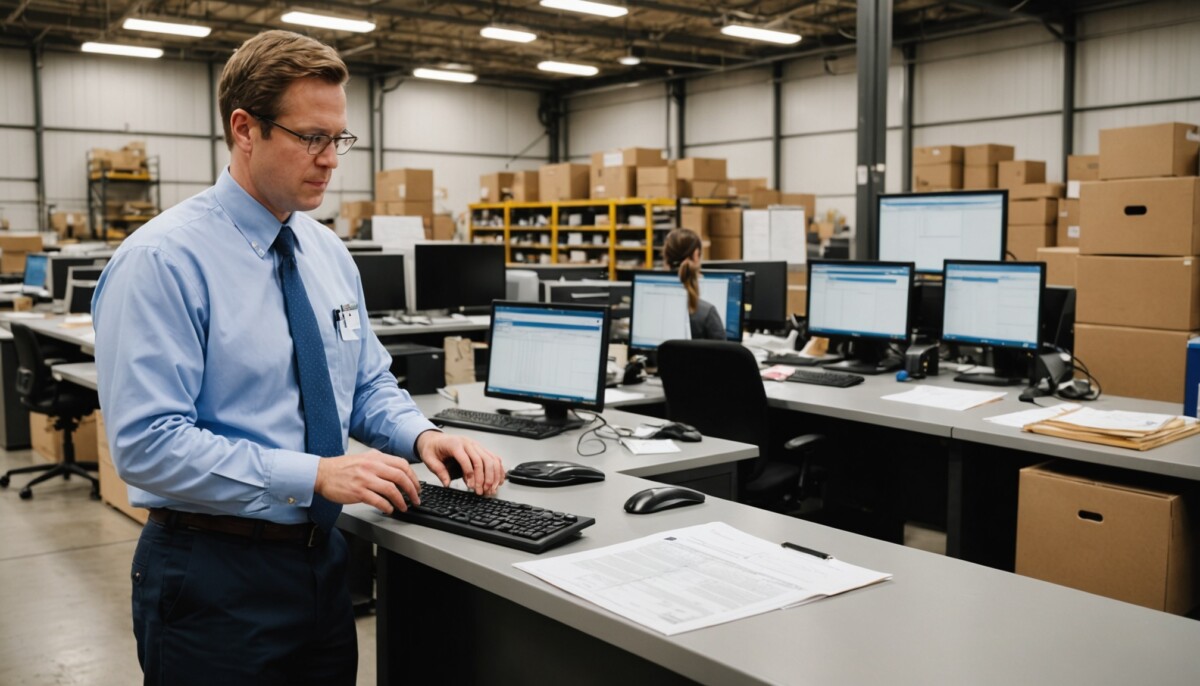
Picture a warehouse manager at a residential field service company. Before the day’s jobs go out, the question is always the same: do the trucks have what they need? The answer, right now, comes from memory, a handwritten list, or a text message from a technician the night before. The central stockroom has inbound records checked against packing slips, but no reliable record of what left on which truck or when. The technicians have a standard stock list they are supposed to maintain, but whether any given truck actually matches that list is unknown until someone physically checks.
This is not a crisis. The work gets done. But it is a situation that becomes harder to manage as the number of trucks grows, and it is exactly the kind of operational gap that a system of recorded stock movements is designed to close.
How the Gap Develops
In the situation described above, the inbound side has a packing slip check, while outbound movements are not recorded. Inventory moves in two directions: into the stockroom when a supplier delivers, and out of the stockroom when a technician picks parts for a job or restocks a truck. The inbound side has some documentation. The outbound side is where the record tends to break down.
When a technician grabs a handful of fittings, wire connectors, or small consumable parts before heading out, in an operation like this, that movement is often not written down in a way that updates a central record. The warehouse manager may not know the parts left until the bin looks low. The service manager has no way to confirm that each truck is carrying the right quantities without physically inspecting it. And when a technician runs short mid-job and either improvises or makes an unplanned supply run, that event is invisible to everyone back at the office.
The replenishment cycle that follows is reactive. A technician notices a shortage, goes to the stockroom, and if the part is not there, goes directly to the purchaser. A purchase order gets created. The warehouse manager may or may not be in that loop. The result is a purchasing process driven by whoever notices a problem first, rather than by a consistent view of what each location actually holds.
What This Costs in Practice
The direct costs of this gap are difficult to measure precisely, which is part of the problem. Possible effects include technicians carrying more stock than necessary as a buffer against uncertainty, emergency restocking trips that consume time and fuel, and small consumable costs that accumulate across jobs without being attributed to any specific work order.
There is also a management attention cost. When a service manager or install manager wants to know whether the trucks are properly stocked, the only way to find out is to ask or to look. That works for a small operation, but as a company adds trucks and technicians, those informal checks become a recurring distraction for the people who should be focused on scheduling and quality.
What a Better Approach Needs to Do
Before evaluating any system, it helps to be clear about what the workflow actually requires. The core need is straightforward: every stocking location, whether that is the central stockroom or a technician’s truck, should have its own recorded balance that updates when parts move in or out. When a technician uses consumables on a job, that usage should reduce the truck’s recorded balance. When the balance on a truck falls below a defined minimum, the system should surface a replenishment suggestion so the warehouse can act before the technician runs short.
Two practical questions follow from this. First, how consistently will movements be recorded? A system built on recorded movements is only as accurate as the entries made into it. If technicians record usage at the end of each job, the balances stay current. If recording is delayed or skipped, the balances drift. This is not a flaw in the approach; it is the central discipline the approach requires. Second, how does this inventory system connect to the dispatch and job management tools already in use? That integration question is separate from the inventory question and should be evaluated on its own terms.
How Versa Supports This Workflow
Versa Cloud ERP maintains separate on-hand balances for each facility. In this context, the central stockroom and each truck can each carry its own inventory record. When parts are picked from the stockroom and loaded onto a truck, that movement is recorded as a transfer between facilities, reducing the stockroom balance and increasing the truck’s balance. Transfers between facilities create paired records in the inventory history, so the warehouse manager and service manager can see what each location holds at any point without making a phone call. Stocking locations beyond the first use Versa’s multiple-warehouse capability, which is an optional firm feature, so the number of truck locations belongs in the pricing discussion.
Versa supports reorder rules configured per part, and the Reorder Report provides a replenishment planning signal for review. The warehouse manager can set a minimum quantity for each consumable at each location. When recorded stock falls below that threshold, the Reorder Report surfaces a suggestion at the next review. Whether reorder levels can be set and reviewed per individual truck location is a specific to confirm during the demonstration. For the central stockroom, the same reorder logic applies: when stockroom quantities fall below the defined level, the report suggests a purchase order to the supplier.
Versa records consumption through inventory transactions and retains the resulting history. Whether consumable usage can be attributed to each service job, and how field staff submit that usage, is a specific to confirm in the demonstration. Periodic physical counts, supported by Versa’s inventory worksheet tools, are the practical check on recorded balances. The system supports cycle counts and adjustments to reconcile recorded quantities against actual stock.
Regarding the connection to an existing dispatch and job management platform: Versa has integration capabilities, and the specific interoperability with any particular field service platform should be confirmed during the evaluation. This is a prerequisite question, not an assumption.
What the Morning Looks Like With This in Place
Return to the warehouse manager at the start of the day. With recorded stock movements configured in Versa, the question of what each truck holds has a recorded answer. The manager can review each truck’s current balance before the day’s jobs go out. If a truck’s recorded stock for a particular fitting is below the minimum, the Reorder Report shows it at the next review, and the warehouse can pull from the stockroom and record the transfer before the technician leaves. The service manager and install manager can check truck balances without walking the lot.
The informal texts and handwritten lists do not disappear overnight. The transition from manual to recorded-movement tracking requires consistent recording discipline from the people using the system, and that is a change management question as much as a software question. But the infrastructure for accurate, location-specific visibility is in place from the first day the system is live.
See This Workflow in Versa
If you are evaluating how recorded stock movements would work for your stockroom and service trucks, the most useful next step is to see a representative workflow in Versa: how a consumable part is set up across multiple facilities, how a transfer from stockroom to truck is recorded, and how the Reorder Report surfaces a replenishment suggestion when a truck’s balance falls below its minimum. Request a focused Versa demonstration of this workflow. No preparation is required; the demonstration will use a representative scenario to show how the system handles each step.
If you would like to explore this topic before speaking with sales, ask Versa AI Advisor about this workflow. The Advisor can walk through how the inventory approach works and help you frame the right questions for a product conversation.
Request a focused Versa demonstration of the consumable inventory tracking workflow for stockroom and service trucks.